
US Tariffs Are Changing Europe’s Approach to Chinese Investment
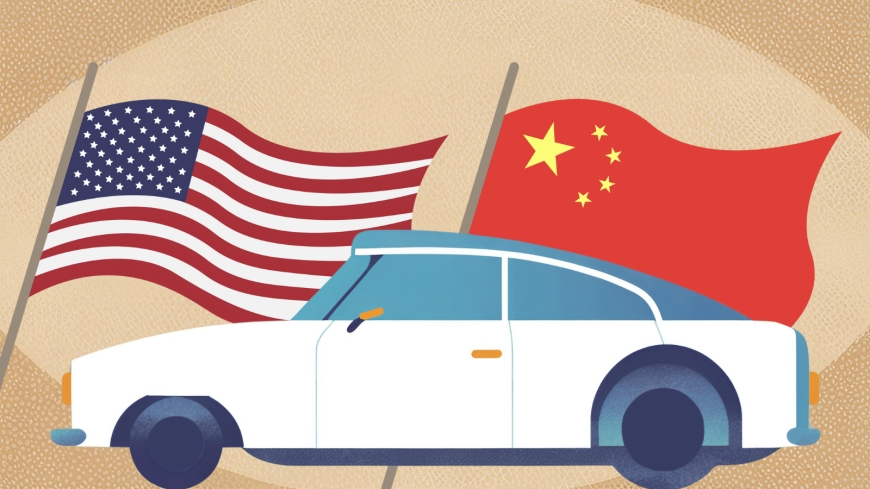
Here’s how U.S. tariffs are reshaping Europe’s stance on Chinese investment—and why it's reshaping trade policy across the bloc:
U.S. tariffs spark fear of a flood of Chinese exports into Europe
When the U.S. imposed sweeping tariffs on China—up to ~54 % on EVs and other products—Europe braced for retaliation and diversionary trade flows. U.S. measures on China triggered worries that Chinese exports might redirect to Europe, especially in electronics and machinery, prompting Brussels to consider emergency safeguard tariffs on such goods TIME+15The Irish Times+15The Parliament Magazine+15.
Surge in Chinese investment and M&A in Europe
To avoid U.S. tariffs, Chinese firms have increasingly turned to Europe as a growth market. In 2024, Chinese investment into Europe rose sharply—deal value jumped by 83% to about US $12.6 billion—highlighting a push into sectors like aviation leasing and clean tech mergers.whitecase.com.
Europe recalibrates trade and investment strategy
Brussels is designing a new "economic security doctrine" to overhaul Chinese trade and investment ties. This includes:
-
A proposed investment screening framework giving the EU Commission power to block Chinese FDI or impose conditions on greenfield investments.
-
A new overcapacity instrument targeting Chinese imports to guard against price dumping.
-
Breaking from “country‑agnostic” investment rules to focus strategically on sovereignty and know‑how gmfus.org+1The Irish Times+1.
EV trade tensions and efforts to force technology transfer
In mid‑2024, the EU implemented tariffs up to ~35 % on Chinese electric vehicles (on top of the standard 10 %). China largely escaped the highest rates if companies cooperated with an EU subsidy probe Reddit+6CNN+6Reddit+6. Meanwhile, Brussels is pressing for tech sharing: requiring Chinese firms to locate manufacturing in Europe and transfer IP in exchange for investment incentives blockjournal.io+4Reddit+4Reddit+4.
Policy divisions across EU governments
Europe remains divided. Germany—and sectors like the German automakers—favour cautious approaches and warn tariffs hurt competitiveness. Countries like France, Spain, Italy, and the Netherlands push for a firmer stance, including stronger investment controls and trade defense instruments euractiv.com+1CNN+1. EU Parliament members are calling for politically heavy tools, such as EU-level veto of Chinese acquisitions deemed strategic gmfus.org.
Changing power dynamics: Europe steers a tougher, strategic path
As U.S.–China tensions escalate, Brussels is pivoting toward economic security. The EU will leverage new trade powers, diversify partnerships (e.g. India, Mercosur), and seek negotiated alignment with China—especially on climate cooperation—while managing internal rifts Financial Times+4The Washington Post+4Reuters+4.
Why it matters now
As of July 2025, the EU-China summit on July 24 arrives amid heightened tensions, with limited expectations of major breakthroughs The Irish Times+1euractiv.com+1thediplomat.com+1The Irish Times+1RedditReddit+7Reddit+7Reddit+7thediplomat.com+4gmfus.org+4Reddit+4Reuters. Still, the summit signals Europe doubling down on its own approach to trade, despite U.S. pressure—and diverging views from within.
In short: U.S. protectionism has accelerated Europe’s shift, from a historically open investment posture to a security-conscious regime that mixes tariffs with screening rules, industrial localisation mandates, and a newfound focus on technology transfer and sovereignty. Europe is now intent on ensuring Chinese capital brings European value—while defending itself from being overwhelmed by subsidy‑backed state actors.
What's Your Reaction?
 Like
0
Like
0
 Dislike
0
Dislike
0
 Love
0
Love
0
 Funny
0
Funny
0
 Wow
0
Wow
0
 Sad
0
Sad
0
 Angry
0
Angry
0

Ανάλυση ναι — μαντεία όχι.